


We love fabrics made from natural fibres for their longevity and their unique properties.

Boiled wool I 100% natural fibre
Boiled wool is made of 100% virgin wool, i.e. wool shorn from the living sheep. This gives boiled wool a wide range of excellent properties that only a natural textile fibre can offer. Wool is naturally temperature-regulating, dirt- and water-repellent and keeps pleasantly warm, making it a true all-rounder as a cooler rug and travel rug. Wool is also extremely easy to care for.

Production process
After shearing, the wool is washed, combed, drawn out and spun. Once the wool yarn has been woven into a loose fabric, the wool is “fulled”: it is pressed, moved and rubbed against itself in warm water. This causes the wool fabric to shrink by 20-60% and creates a firm structure in which the air pockets characteristic of boiled wool form. These provide boiled wool's warming and temperature-balancing properties. Only clear water is used – no chemicals or other softeners.
Use
Thanks to wool's temperature-balancing effect, heat build-up is not a concern. This makes wool ideal for warming up before or cooling out after training, and it keeps your horse warm during transport (for example in a draught).
Our rugs also work well in summer, for example in cool temperatures or after long spells of rain. Wool is also suitable for horses prone to muscle tension or that feel the cold easily.
Care
Easy to care for and washable - coarse dirt can be shaken off and/or brushed out with a soft brush - unpleasant odours disappear on their own. Thanks to the unique, dirt-repellent properties of the natural fibre, one wash per year is sufficient with average use (cold wash, wool cycle).
For optimal care we recommend the CHVX*N care set. Alternatively, a conventional re-greasing wool detergent can be used.
Boiled wool fabrics are temperature-regulating - hollow spaces in the fibre trap the ambient temperature within the wool and keep warm, while in warm conditions wool releases the heat.
Boiled wool fabrics are breathable - thanks to the natural fibres, the fabric lets little air and water in, yet still releases moisture to the outside well.
Boiled wool fabrics are moisture-regulating - wool is hydrophobic, so it releases moisture well and dries quickly. Wool can also absorb up to 35% of its own weight in water without feeling damp.
Boiled wool fabrics have high heat retention - wool has the best heat-retaining ability of all textile fibres. It keeps warming even when wet.
Boiled wool fabrics are water-repellent - thanks to the air pockets and the wool grease (lanolin), the fabric has a natural waterproofing. To a certain degree, water droplets simply roll off.
Boiled wool fabrics are wind-resistant - the fulling process felts the fibres together, and with the help of trapped air they form a natural barrier against wind.
Thanks to their natural lanolin content, boiled wool fabrics are bacteria-inhibiting.
Boiled wool fabrics are dirt-resistant - thanks to the natural waterproofing, coarse dirt can easily be shaken off or brushed out.
Boiled wool fabrics are durable - the fulling process creates a firm surface that is exceptionally robust.
Boiled wool fabrics are easy to care for and odour-neutralising - odours are not stored and can be neutralised by airing, and the fibres are also dirt-resistant and machine washable (cold wash).
Boiled wool fabrics are flame-retardant - wool is not as easily flammable as synthetic fibres.
Thanks to the unique properties that only natural fibres have, boiled wool is very long-lasting — a rug will accompany your horse for many years.
Boiled wool is long-lasting, biodegradable and free from microplastics.
Odours are not stored and can be neutralised by airing.

Cotton I 100% natural fibre
Cotton has been used to make textiles for thousands of years and is especially valued for being gentle on skin and coat and for its low allergy potential. Static charge is ruled out. The raw material consists of the seed fibres of the ripe cotton bolls, and the fibre hairs in turn are made up of 95% cellulose. The fibre is biodegradable and releases no microplastics when washed — synthetic textiles do not share this. Our cotton is easy to care for and washable (max. 40°C with a gentle detergent on a delicate cycle).
Production process
To make cotton fabric, the cotton fibres are harvested, cleaned and ginned. The long cotton fibres are then sorted and pressed into bales. Next, spinning mills turn the bales into cotton yarn, which is finally woven into fabric.
Cotton is grown in over 80 countries, including China, India, the USA, Pakistan, Brazil, Australia, Turkey, Greece, Mexico and countries in Africa. CHVX*N cotton comes from Italy and Turkey.
Use
Thanks to its high resistance and tear strength, cotton is ideally suited for use on the horse and in the stable. The natural fibre releases excess heat well, absorbs moisture extremely well, is at the same time breathable and does not have an insulating effect.
This makes cotton less warming than, for example, boiled wool, and ideal as a light cooler and/or transport rug, even in summer.
Care
Cotton is hard-wearing, long-lasting and easy to care for.
We recommend washing CHVX*N rugs made of cotton at a maximum of 40°C with a gentle detergent on a delicate cycle.
For optimal care we recommend the CHVX*N care set.
Cotton does not build up static charge and is therefore particularly well suited to horses that are sensitive to static electricity.
Compared with synthetic materials such as polyester, cotton stands out for its natural breathability.
Cotton fibres are anti-allergenic and very soft, which makes them highly comfortable to wear.
Cotton is breathable and highly absorbent. Cotton can absorb up to 20% moisture without feeling damp. This gives cotton a cooling effect in summer.
Cotton fibres are robust and resilient, which is why they are excellently suited for use in the stable and on the horse.
Easy to care for and washable (max. 40°C with a mild detergent on a gentle cycle). For optimal care we recommend the CHVX*N care set.
Thanks to the unique properties that only natural fibres have, cotton is very long-lasting — one rug accompanies your horse for many years.
Cotton is long-lasting, biodegradable and free of microplastics.
Merino wool I 100% natural fibre
Unlike conventional wool, merino wool comes from the merino sheep and is much finer and softer than ordinary shearing wool – it is also rarer. Merino wool naturally has many positive properties: it regulates temperature, inhibits bacteria and is breathable. It also neutralises unpleasant odours and wicks moisture away quickly. This makes merino wool ideally suited for warming up, cooling off after exercise and for transport.
Production process
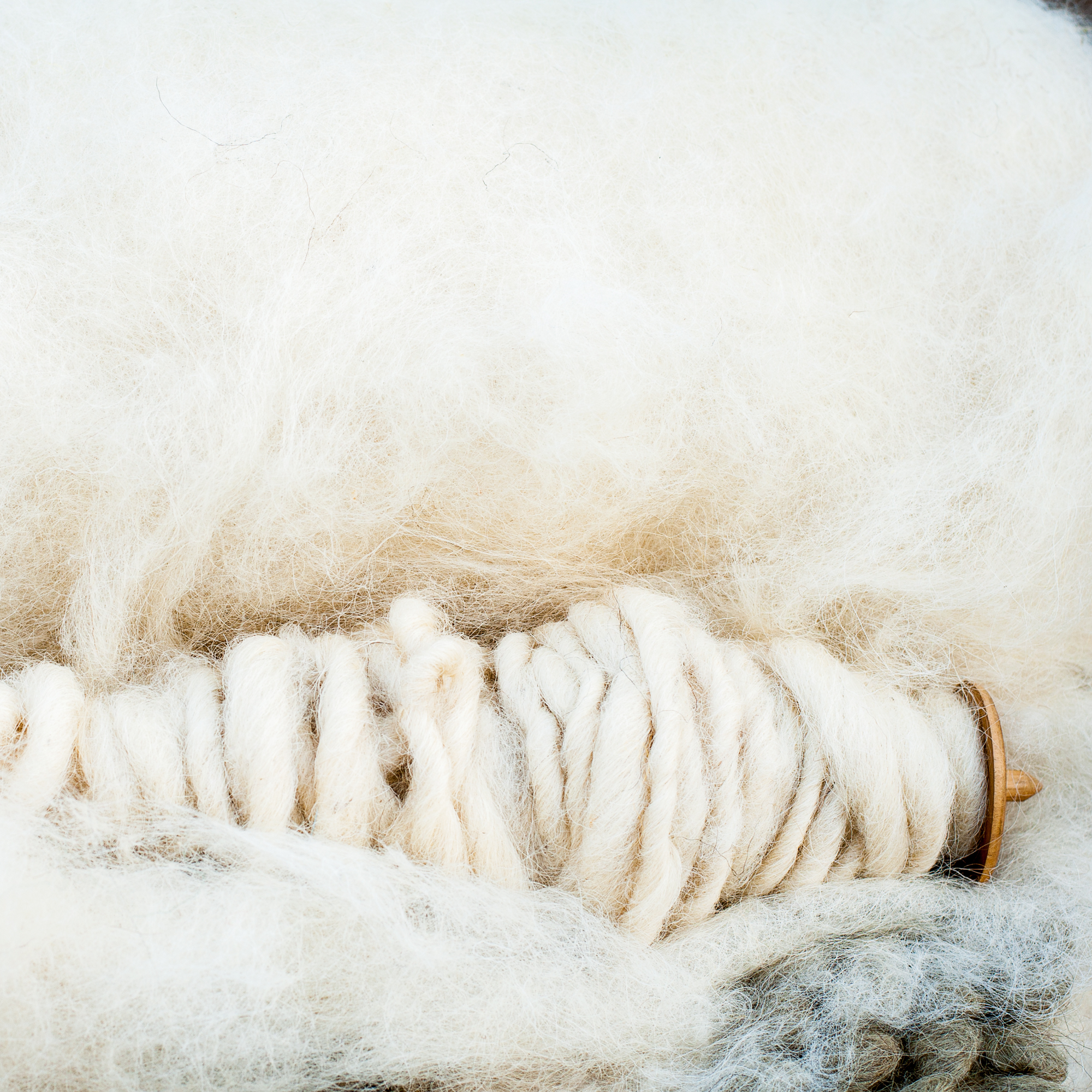
Merino wool is shorn in large, connected pieces. The resulting fleece is washed thoroughly and combed until the wool fibres lie side by side. The individual fibres are then spun into yarn, which is subsequently woven.
Merino sheep are kept for wool production mainly in New Zealand, Australia, Argentina and South Africa.
Use
Merino wool is not only soft, light and breathable, but also odour-neutral and temperature-regulating, which makes it ideal for sports and outdoor clothing.
Merino wool is an excellent choice for horse rugs, as it protects against the cold and at the same time wicks moisture away. Merino wool is particularly light, breathable and non-scratchy – ideal for horses with sensitive skin and coats. Merino wool is an exceptionally valuable alternative to synthetic materials.
Care
Merino wool is very easy to care for and simple to wash. However, there is something you should bear in mind: we recommend cold washing only, on the wool programme, with a wool detergent that contains no enzymes. Some wool detergents contain the enzyme protease. This enzyme can break down the keratin in merino wool, which can lead to unsightly little holes after washing. We recommend pH-neutral detergents for delicates or sportswear, or the CHVX*N care set and a regular lanolin treatment.
Merino wool is super soft – thanks to its very fine fibres, it feels very pleasant on the skin and is therefore particularly suitable for sensitive horses.
Merino wool is breathable - owing to its natural fibres, merino wool lets little air and water in, while releasing moisture to the outside well.
Thanks to its natural lanolin content, merino wool is antibacterial.
Merino wool is moisture-regulating - wool is hydrophobic, so it releases moisture well and dries quickly. In addition, wool can absorb up to 35% of its own weight in water without feeling damp.
Wool has a high level of heat retention and the best warmth-keeping ability of all textile fibres. It keeps you warm even when it is wet.
Merino wool is temperature-regulating - cavities in the fibre trap the surrounding temperature inside the wool and keep it warm; when temperatures are warm, the wool tries to carry the heat away.
Merino wool is odour-neutralising - odours are not stored and can be neutralised by airing.
Merino wool is wind-resistant.
You love natural fibres as much as we do, but you still have questions?
We look forward to getting to know you and are happy to offer a consultation.